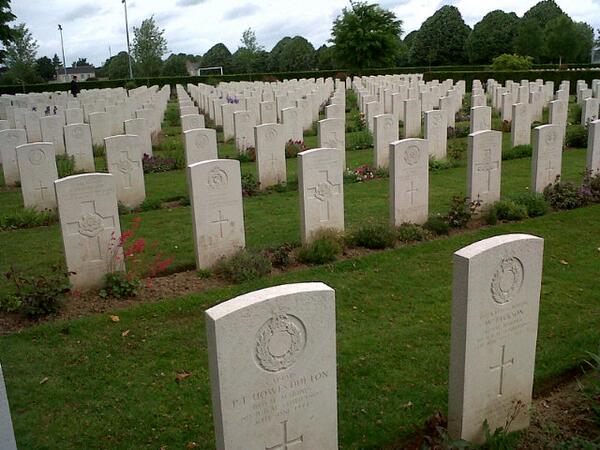
I recently visited the Hooge Crater Cemetery just east of Ypres/Ieper.
Almost 6,000 Commonwealth servicemen of the First World War are buried or commemorated in this cemetery – with more than 3,500 of the burials unidentified.
Graves marked as mass burials.
Special memorials record the names of a number of casualties either known or believed to be buried among them, or whose graves in other cemeteries were destroyed by shell fire.
The cemetery was designed by Sir Edwin Lutyens and is situated near the site of the Hooge Chateau.
Hooge, near Ypres.
The chateau and its stables were the scene of fierce fighting throughout the First World War.
I will post more about the trench network still visible in the chateau grounds tomorrow.
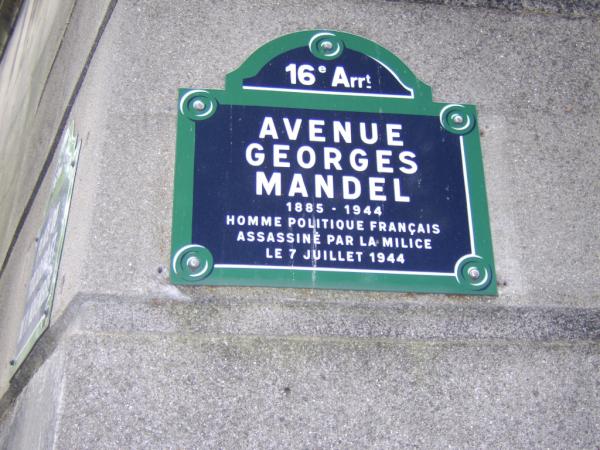
Spotted in Paris: this street named after executed politician, Georges Mandel.
Mandel died 69 years ago today, on July 7, in 1944 at the hands of the Milice, a paramilitary force which collaborated with the Nazis.
Born in 1885, into a prosperous family (his given name was Louis-Georges Rothschild, though he was no relation to the banking family), Mandel’s political career began at age 21 as a member of the personal staff of French Premier Georges Clemenceau. He went on to serve in the National Assembly from 1919 to 1924, and then again from 1928 to 1940.
In 1940, he was transferred to the Ministry of the Interior by then French Premier Paul Reynaud, with whom he shared the conviction that no armistice should be made with the German invaders, and that the battle should continue, even if only from France’s colonies in Africa.
After the resignation of Reynaud and the establishment of the Petain/Vichy government, Mandel sailed to Morocco, where he was arrested and sent back to France and imprisoned.
He was handed over to the Germans, and put in concentration camps in Oranienburg and Buchenwald.
Mandel was returned to Paris on July 4, 1944, as a hostage. While being transferred from one prison to another, he was captured by the Milice.
Three days later, the Milice took Mandel to the Forest of Fontainebleau, where they executed him. He was buried at Passy Cemetery.
As he was being handed over to his countrymen by the German SS, he is said to have stated: “To die is nothing. What is sad is to die without seeing the liberation of the country and the restoration of the Republic.”
At 8.30am on July 7, 1916, the 38th (Welsh) Division began its attack on Mametz Wood.
The capture of the wood was key to a successful attack on the German second line in this area of the Somme battlefield.
The first advance floundered in chaos 200-300 yards short of the wood, and a further attack at 11am met with the same fate.
The Germans were well dug in and to approach the wood the attacker had to cross an open field.
After 15 hours of continuous fighting the Welsh were forced to regroup.
During the afternoon of July 11, the decision was taken to withdraw the Welsh Division from the battle area.
The 38th Division was relieved by the 21st Division, which cleared the remainder of Mametz Wood by midday on July 12, encountering little resistance.
The Welsh Division did not have the satisfaction of seeing the job through and witnessing the total capture of Mametz Wood.
As this detailed article by Dr Robin Barlow, of Aberystwyth University, notes: “The human toll at the battle of Mametz was a high one.
“Between 7-12 July, 911 NCOs and other ranks from the Welsh Division lost their lives, plus 37 officers. In addition, many hundreds more men would have been posted missing, their bodies never recovered. The 16th (CardiffCity) Battalion, Welsh Regiment suffered the greatest loss with 153 men and five officers killed, 129 of whom (and three officers) died on July 7.
“The 14th (Swansea) Battalion, Welsh Regiment had entered its first major engagement of the First World War on July 10 with 676 men; by nightfall, 75 men and one officer had died, with a further 376 casualties. More than half the Battalion was lost in one day.
“The attacking strength of the 17th Battalion, Royal Welsh Fusiliers was recorded as ‘950 bayonets’; on July 12 Emlyn Davies transmitted a message to 115th Brigade headquarters, ‘strength 5 Officers, 142 Other Ranks’.”
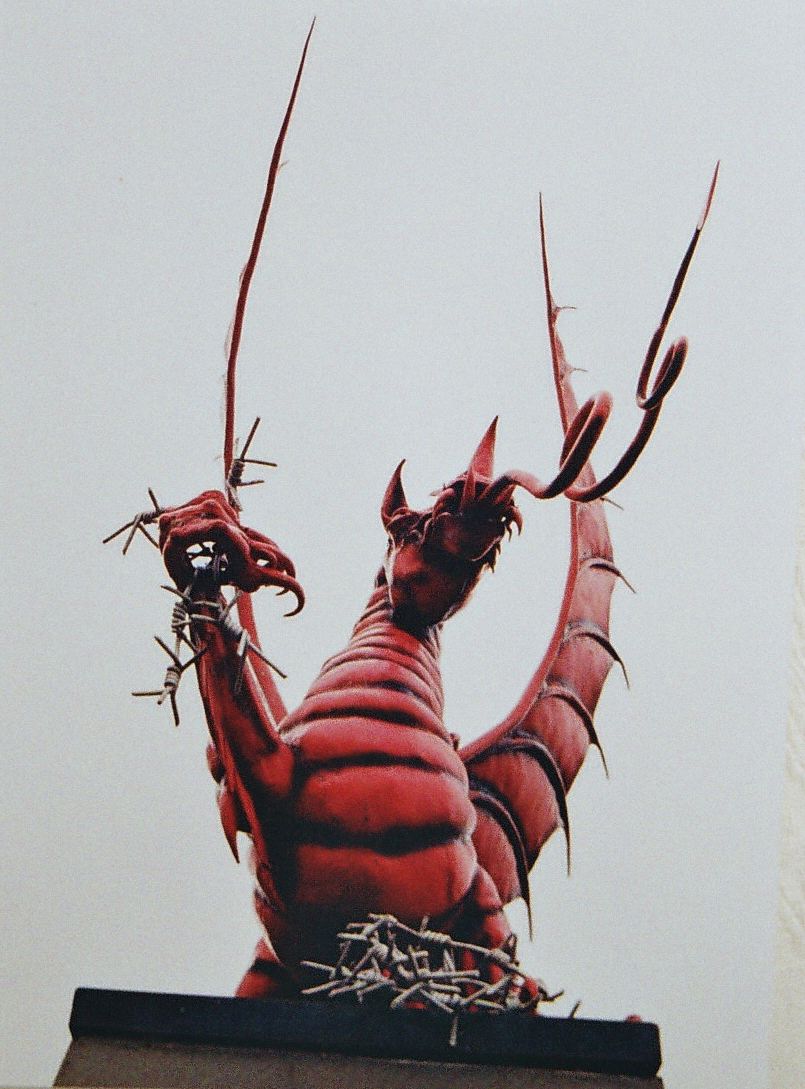
The battle has gained an iconic status in Wales.
Dr Barlow writes: “Although the name of Mametz Wood has come to symbolise the sacrifice and commitment of Welsh troops in the First World War, their actual contribution – and even their bravery – is wreathed in controversy and debate. Was it a glorious success or a chaotic failure?
“In the words of the officers of a neighbouring division, the advance of the Welsh Division on July 10 was ‘one of the most magnificent sights of the war’, as wave after wave of men were seen ‘advancing without hesitation’.”
The sun shines on the Welsh National War Memorial in Cardiff.
It commemorates the servicemen who died during the First World War. A plaque to those who died during the Second World War was added in 1949.
The memorial takes the form of a circular colonnade surrounding a sunken court and was unveiled in June 1928 by the then Prince of Wales.
It features inscriptions in Welsh and in English, and was designed by Sir Ninian Comper, the Scottish architect who mostly worked on designs for churches.
At the centre of the court is a group of bronze sculptures by Alfred Bertram Pegram, arranged around a stone pylon.
Around the base stand three figures, a soldier, sailor and airman, holding wreaths aloft.
It is situated in Alexandra Gardens, Cathays Park, and is made from the same stone as the civic buildings which surround the gardens.
Abbeville was an important town for the Allied armies throughout much of the First World War.
It housed the headquarters of the lines of communication and three army hospitals.
Its cemetery contains more than 2,500 World War 1 graves and several hundred from World War 2.
The cemetery contains around 3,000 graves
The cemetery consists of the communal section and an extension which was begun in September 1916.
I took these photographs during a visit there a few years ago.
Here are a few of those buried there. Private Charles Leslie Bibby, of the King’s Liverpool Regiment.
Charles Leslie Bibby
Private E Edwards, of the 9th Battalion, Royal Welsh Fusiliers.
E Edwards
William Sheehan, of New Ross, County Wexford, who served in the Royal Irish Regiment.
William Sheehan
The town also played an important role in the Second World War.
The Commonwealth War Graves Commission notes: “Abbeville was a major operational aerodrome, but the town fell to the Germans at the end of May 1940. On 4 June, an attempt was made by the 51st Division, in conjunction with the French, to break the German bridgehead, but without success. Towards the end of 1943, eight large ski shaped buildings appeared near Abbeville. These proved to be storage units for flying bomb components and they were heavily bombed by Commonwealth air forces. Abbeville was retaken on 4 September 1944 by Canadian and Polish units.”
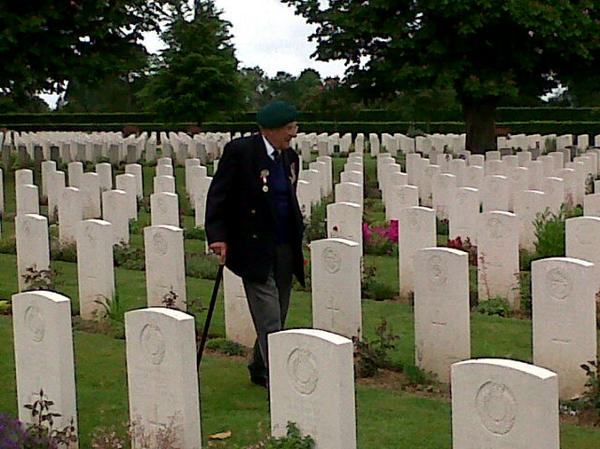
A year ago today I was fortunate to be in France with Ted Owens, a veteran of 41 Commando who landed on Sword Beach on D-Day.
Ted, aged 88 and from Pembroke Dock, Wales, returned to the spot at which he had been wounded during the landings.
Ted was badly injured on the beach within a few minutes of the landing and was sent back home. He returned to his unit in August and later fought in Belgium and the Netherlands.
On June 6, we headed to Bayeux War Cemetery. Ted was keen to find the grave of a fallen comrade from 41 Commando.
Ted Owens at Bayeux War Cemetery
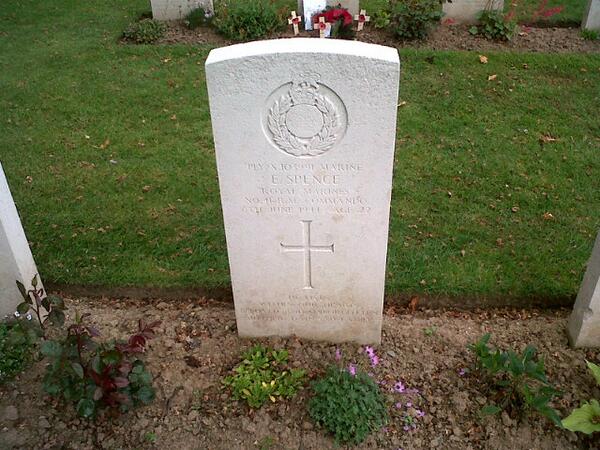
He found the grave of Marine Ernest Spence, from Royton, Lancashire, and laid a small wooden cross.
Ernest Spence, killed on D-Day.
Ted’s trip was filmed for a television programme called ‘Welsh Heroes of World War 2: D-Day Commando’, which is available to watch online here.
November 11 1943 is, I understand, a well-remembered day for historians of the Resistance in Nazi-Occupied France.
It was on that day that the Maquis paraded through the town of Oyonnax in what Matthew Cobb in his excellent book The Resistance describes as a “stunt”.
The event was designed as a show of strength, a morale boost for the local population. The town was chosen because there was no German garrison nearby.
More than 200 Maquisards took part. They marched, sang the Marseillaise and then disappeared back into the mountains.
Sometime ago I came into possession of this small medallion. It features the date ‘XI Novembre, 1943’.
One side is the Cross of Lorraine smashing a Swastika.
On the other side is an Astrix-like warrior.
I would love to know the story behind it. I assume it relates to Oyonnax, but does it?
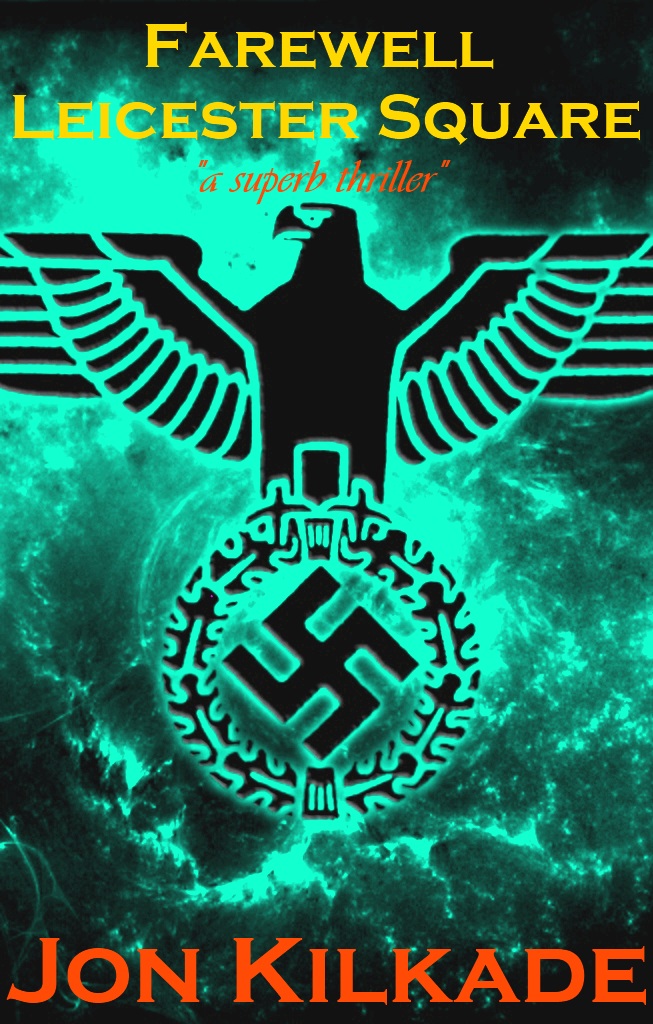
Very excited to receive the cover image for the new e-edition of ‘Farewell Leicester Square’.
The Kindle version of the book is on sale at a special price at the moment so please check it out!
There have been so many great reviews so far. Thanks to all the readers who have contacted me.
“A superb thriller… I didn’t know where the story was going and it really zipped along… Lots of action and intrigue. Loved it.”
“Captivating from beginning to end. A thoroughly enjoyable read. Full of intrigue and some shocks along the way. Historical wartime descriptions are incredibly accurate and deftly pull you into the story. It’s almost as if you’re there. Looking forward to the next one by Mr Kilkade.”
“Excellent thriller… Fast plot and lots of action and builds to a very exciting climax over London. I loved it.”
“A must read. Thoroughly enjoyable read. Captivates the readers imagination.”
Thanks!
Don’t forget to let me know what you think of the new cover.
While researching ‘Farewell Leicester Square’ Jon Kilkade spent a great deal of time exploring the amazing concrete legacy of the German occupation of the Channel Islands.
This photograph, taken by Jon, shows one of Jersey’s three direction and range-finding towers for artillery. La Corbière lighthouse is in the background.
Nearby there is a 10.5cm casemate bunker containing its original coastal defence gun – a French WWI gun which the Germans captured during the Blitzkrieg in 1940.
July 2005. London commuters are caught up in a terrifying nightmare as terrorists target the transport network.
As the horror unfolds journalist Jon Kilkade takes a blood-curdling phone-call.
The suicide bombers have come for the city – just as the Luftwaffe did more than half a century before.
But across more than six decades of history lies a secret.
In the closing stages of World War Two the city came within moments of complete destruction, as a close circle of Nazi fanatics planned a final blitz which would see the people of London wiped from the face of the earth.
A fast-paced novel in the tradition of Jack Higgins, Alistair MacLean and Alexander Fullerton.









 jon kilkade