
Book writers!
Read this by my lovely and very talented friend, Heather Hill. (Just Paypal me the cash, Heather.)

Book writers!
Read this by my lovely and very talented friend, Heather Hill. (Just Paypal me the cash, Heather.)
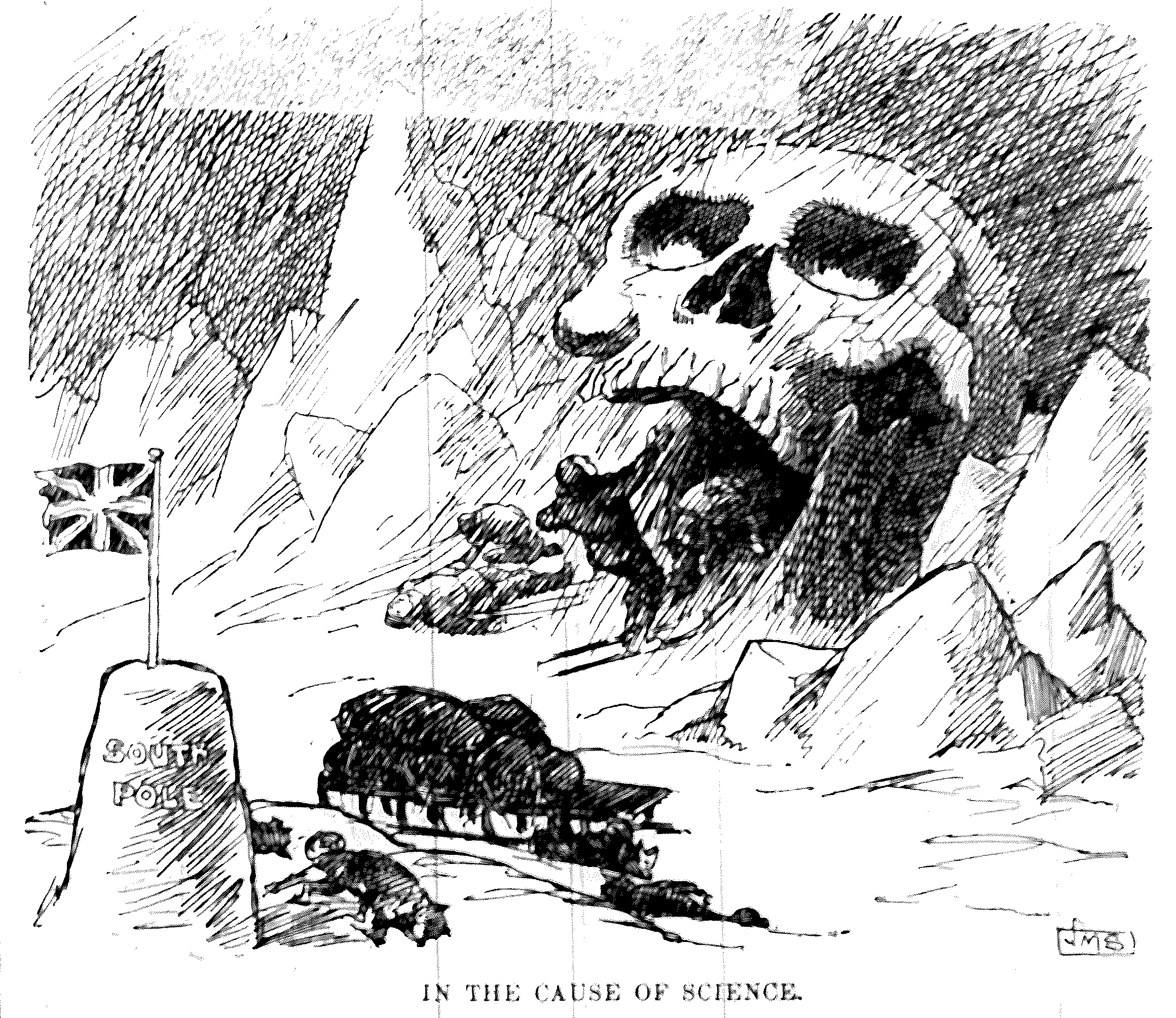
This graphic cartoon image was published in British newspapers 102 years ago this week.
The news of the deaths of Captain Scott and his four companions had finally reached home.
They had been dead since the previous March.
Today, their bodies remain encased in ice, an estimated thirty miles from where they died. Their ice tomb is slowly moving away from the South Pole which had held their dream of glory.
November 11 1943 is, I understand, a well-remembered day for historians of the Resistance in Nazi-Occupied France.
It was on that day that the Maquis paraded through the town of Oyonnax in what Matthew Cobb in his excellent book The Resistance describes as a “stunt”.
The event was designed as a show of strength, a morale boost for the local population. The town was chosen because there was no German garrison nearby.
More than 200 Maquisards took part. They marched, sang the Marseillaise and then disappeared back into the mountains.
Sometime ago I came into possession of this small medallion. It features the date ‘XI Novembre, 1943’.
One side is the Cross of Lorraine smashing a Swastika.

On the other side is an Astrix-like warrior.
 I would love to know the story behind it. I assume it relates to Oyonnax, but does it?
When was it created? How many issued?
Please help and share this post if you can.
Thanks.
(I posted this first in 2013. Had some responses. But still trying to get to the bottom of it!)

Heroes of World War 2: An anti-Mussolini Partisan

Some great WW2 cuttings. Great collection.


Let’s remain in Italy with this picture of a field ambulance dressing station at Handley Cross on the Asiago Plateau. This photo was taken on September 10, 1918. I must say I love this building, entirely covered with sandbags, but with a look of Swiss chalet anyway. It’s a pity such buildings have disappeared after the war.


The Japanese Second Mobile Force retired to cruise a support area about 400 miles south of Kiska. On the second day of attack on Dutch Harbor, two occupation forces moved up to positions from which they could run their objectives. The first was the Adak-Attu Occupation Force and the second, the Kiska Occupation Force. As a result of the defeat at Midway [to be dealt with after this preliminary Alaska situation], the Adak occupation was canceled and the Adak-Attu Force was directed to only seize Attu, where a battalion of Army troops went ashore about 0300 hours, 7 June. The Kiska Force landed a battalion from their Navy at Reynard Cove at 1500 hours, 6 June.
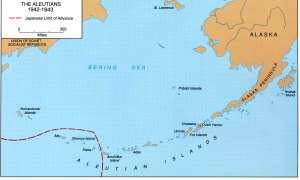
Due to the weather and the attention given to the attacks on Dutch Harbor, US air reconnaissance did not discover that the occupation of Kiska and Attu was taking place until 4 days…
View original post 658 more words
Fantastic photo – and some great research.

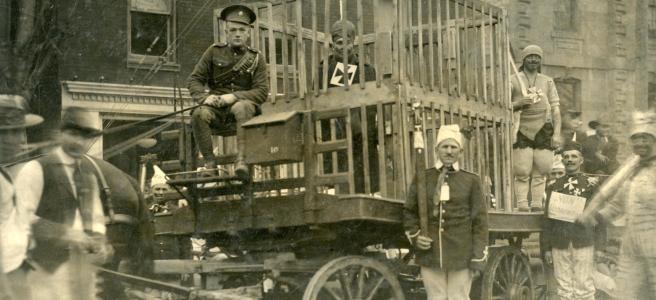
I was unaware of the story behind this unusual postcard when I purchased it at an antiques fair last fall however my research has uncovered an interesting tale. The photo shows a young driver from the Canadian Army Services Corps pulling a wagon with “Old Kaiser Bill” locked up in a wooden cage. The card is not dated but includes a hand-written message on back which reads:
“These are the polash (sic) soldiers that acted up these pictures. See Old Kaiser Bill in the cage and the Prince with his white pants and bound in rope.”
The Prince, presumably Kaiser Wilhelm’s oldest son Friedrich Wilhelm Victor August Ernst, is wearing what appears to be a 19th Century Canadian Militia 7-button tunic with “Austrian Knot” cuffs. The wagon is surrounded by a handful of other characters including one wearing a home-made pickelhaube and holding a sign that says “Von Luddendorff”.
View original post 228 more words

This memorial stone in the grounds of Llandaff Cathedral, Cardiff, commemorates the damage done to the building during the Cardiff Blitz.
In January 1941 the cathedral was gravely damaged when a landmine blew the roof off the nave, south aisle and chapter house. The top of the spire also had to be partially reconstructed.
In 2011, a church historian told me that many lives were saved by a stroke of luck as the parachute mine snagged on the spire before landing in a dip beside the cathedral.
He said: “This actually absorbed much of the blast although had the bomb fallen directly on the green [where there are homes] or in fact directly on the cathedral then many buildings would have been destroyed and the cathedral obviously obliterated.”
He added: “The cathedral organist when he went in the next day said he saw a section of the roof fall, which had fallen like a great arrow, running through the pews and destroying much of the interior.”
One eyewitness, who was seven at the time, was sheltering under the stairs of her family home.
She remembered: “It was such a wonderful night. It was a full moon and it was what they call a hunters moon. That night the hunters were the Luftwaffe.”
Her family was forced from their shelter by a fireman banging on the front door.
“And he shouted get out, he said, the house is on fire, you’ve been hit by a bomb, get out. And I ran out past him into the street screaming. I didn’t go back to my mother and my brother. It was self-preservation!
“They were dropping flares lighting everything up. And also incendiary bombs and we were trying to avoid being hit by any of these things.
“As I was running with all this I was screaming my head off – I thought this is what hell must be like, you know, with all these flames. It was terrifying.”
This photograph shows the cathedral today.


 jon kilkade
