

Author: jonkilkade
A hero of the Royal Charter

This wonderful bronze statue honours a seaman of great courage who saved many lives during one of the major sea-faring tragedies of the Victorian age.
His name was Ġużeppi Ruggier but he was more often known as Joe Rodgers, and he sailed on a clipper called the Royal Charter.

On the night of the October 25/26 1859 the ship was on the last leg of a trip from Melbourne to Liverpool when it was caught in a terrible storm.
In winds in excess of 100 mph the Royal Charter was blown towards Anglesey’s rocky coast.

The ship sent out distress signals but the conditions were so atrocious that the Moelfre lifeboat could not be launched.
Ruggier volunteered to swim ashore with a rope.

Amazingly, the Malta-born sailor reached the rocks to be hauled out of the sea by men from Moelfre.
His rope was used to rig a bosun’s chair and slowly the rescuers began to bring passengers and crew to safety.
They had saved thirty-nine people when the storm broke the ship apart. It is believed that more than four hundred perished.
The Royal Charter was carrying large quantities of gold bullion from the Australian gold rush and its loss became a huge news story at the time.
Ruggier was honoured by the Royal National Lifeboat Institution (the RNLI). He went back to sailing and died in Liverpool in 1897, aged 68.

The bronze memorial was unveiled at Moelfre in 2009 on the 150th anniversary of the tragedy. It was created by Sam Holland.
The inscription on it reads, ‘Joe Rodgers, A hero of the Royal Charter.’
Underneath is a Maltese Cross.

When I visited Moelfre, the weather was very different. A great place; a coastline of beauty where nature can be most cruel.
Book Marketing Tactics You May NOT Have Considered
Book writers!
Read this by my lovely and very talented friend, Heather Hill. (Just Paypal me the cash, Heather.)
In the Cause of Science (Captain Scott)
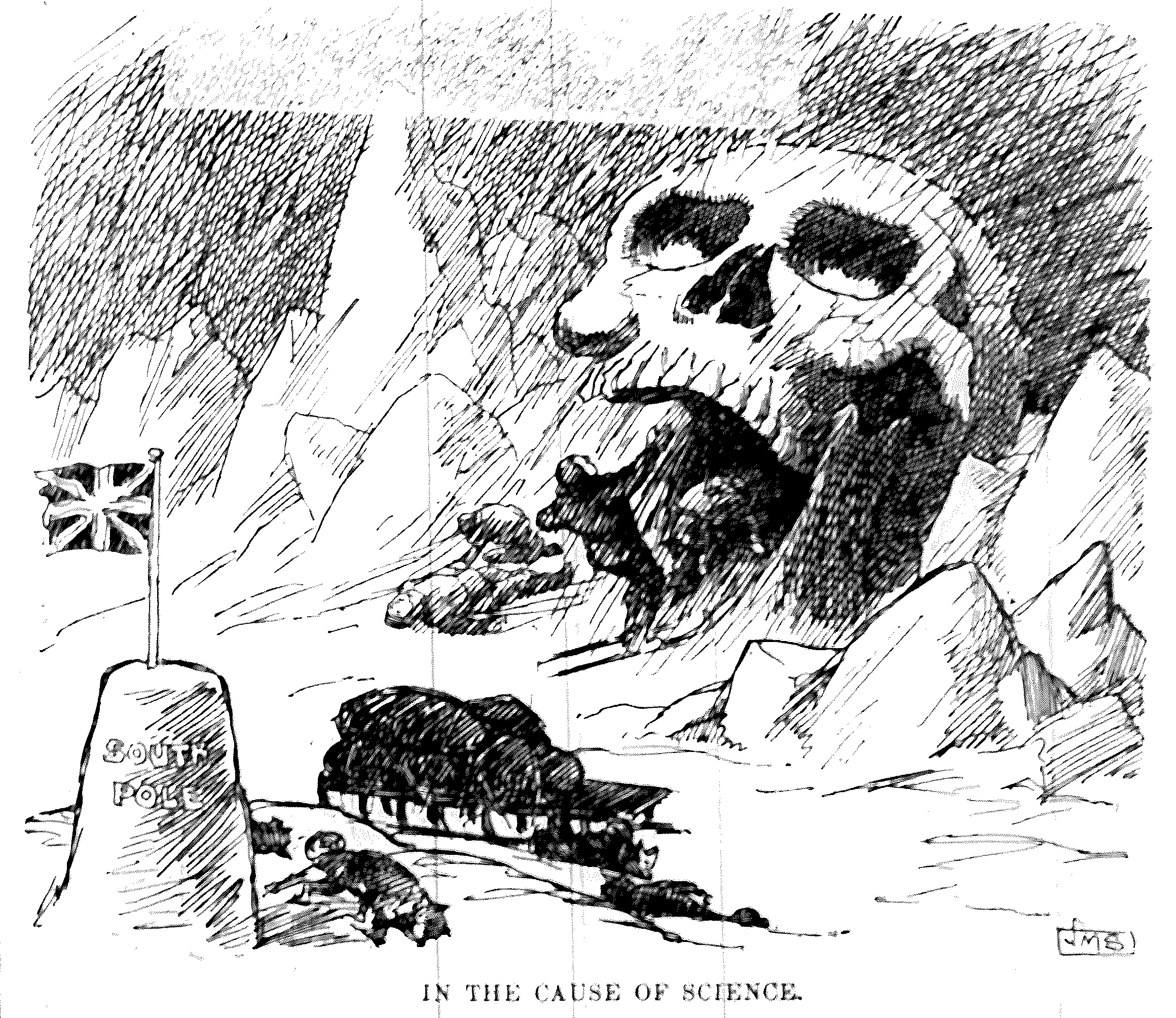
This graphic cartoon image was published in British newspapers 102 years ago this week.
The news of the deaths of Captain Scott and his four companions had finally reached home.
They had been dead since the previous March.
Today, their bodies remain encased in ice, an estimated thirty miles from where they died. Their ice tomb is slowly moving away from the South Pole which had held their dream of glory.
The Cross of Lorraine smashes a Swastika
November 11 1943 is, I understand, a well-remembered day for historians of the Resistance in Nazi-Occupied France.
It was on that day that the Maquis paraded through the town of Oyonnax in what Matthew Cobb in his excellent book The Resistance describes as a “stunt”.
The event was designed as a show of strength, a morale boost for the local population. The town was chosen because there was no German garrison nearby.
More than 200 Maquisards took part. They marched, sang the Marseillaise and then disappeared back into the mountains.
Sometime ago I came into possession of this small medallion. It features the date ‘XI Novembre, 1943’.
One side is the Cross of Lorraine smashing a Swastika.

On the other side is an Astrix-like warrior.
 I would love to know the story behind it. I assume it relates to Oyonnax, but does it?
When was it created? How many issued?
Please help and share this post if you can.
Thanks.
(I posted this first in 2013. Had some responses. But still trying to get to the bottom of it!)
Photo: An anti-Mussolini Partisan

Heroes of World War 2: An anti-Mussolini Partisan
Great Photo: 5th (Bombay) Mountain Battery

A Quick Firing (QF) 3.7 inch gun of the 5th (Bombay) Mountain Battery.
Photo taken in about 1933.
I assume this gun is the basis for the anti-aircraft gun used widely by the British Army during WW2.
A little WWII humor
Some great WW2 cuttings. Great collection.

Mymom took a lot of pictures, saved a lot of pictures, and clipped cartoons during WWII (1940’s). Here are 2 I thought you might enjoy:


The images were scanned while in the plastic protectors. Remember, these a cartoons from a 1941 newspaper. I’m not about to remove a 73 year old newspaper clipping from 43 year old plastic.
I’ll end this blog post with style, specifically the style worn by my maternal grandfather in 1940:

A field ambulance dressing station


Let’s remain in Italy with this picture of a field ambulance dressing station at Handley Cross on the Asiago Plateau. This photo was taken on September 10, 1918. I must say I love this building, entirely covered with sandbags, but with a look of Swiss chalet anyway. It’s a pity such buildings have disappeared after the war.

June 1942 (2)


Alaska
The Japanese Second Mobile Force retired to cruise a support area about 400 miles south of Kiska. On the second day of attack on Dutch Harbor, two occupation forces moved up to positions from which they could run their objectives. The first was the Adak-Attu Occupation Force and the second, the Kiska Occupation Force. As a result of the defeat at Midway [to be dealt with after this preliminary Alaska situation], the Adak occupation was canceled and the Adak-Attu Force was directed to only seize Attu, where a battalion of Army troops went ashore about 0300 hours, 7 June. The Kiska Force landed a battalion from their Navy at Reynard Cove at 1500 hours, 6 June.
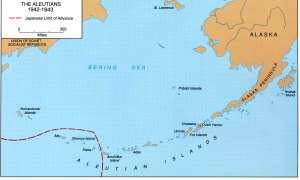
Due to the weather and the attention given to the attacks on Dutch Harbor, US air reconnaissance did not discover that the occupation of Kiska and Attu was taking place until 4 days…
View original post 658 more words
 jon kilkade
