German soldier Georg Fuchs lies with two comrades in the corner of the British cemetery opposite the Ploegsteert Memorial in Belgium.
Georg Fuchs
The Hyde Park Corner cemetery is at the scene of a road junction to the north of Ploegsteert Wood (‘Plug Street’ to the British soldiers).
The cemetery was begun in April 1915 by the 1st/4th Royal Berkshire Regiment and was used at intervals until November 1917. It contains 83 Commonwealth burials of the First World War.
The German war graves are at the rear.
Three German graves.
Two of the German soldiers are unidentified.
Unidentified graves.
Nearby there is a Jewish soldier of the Loyal North Lancs Regt.
A brief story of two Royal Welch Fusiliers who were wounded at battles for woods on the Somme.
Their graves are located in the cemetery at Abbeville, which was some way from the front.
Abbeville cemetery
I took these photos some years ago and now the wonderful Anne Pedley, of the Royal Welch Fusiliers Museum in Caernarfon, has helped me piece together parts of the stories of Ceredig Ellis and Edward Roberts.
Ceredig Ellis
Second Lieutenant Ellis, whose parents were from Aberystwyth, was married to Mildred and lived 61 Oxton Road, Wallasey, Cheshire.
He was educated at Bangor University where he was a member of the OTC.
He was commissioned on February 1, 1915. He was transferred to 15th RWF (the London Welsh) and joined the battalion in France.
He saw action with D Company and was wounded at Mametz Wood on July 11, 1916.
He was to die of these wounds, most likely at Abbeville where there was a large military hospital.
Ceredig’s grave – detail
As the inscription on the grave indicates Mildred had recently given birth to their first child.
The second fusilier, CSM Roberts, enlisted with 10th RWF and embarked to France on September 27, 1915.
He received the Military Medal for bravery while in trenches in the Kemmel area, where the Fusiliers defended themselves against a German gas and an infantry attack.
Edward Roberts
He also fought at High Wood and it was during fighting there that he was first reported missing and then wounded.
He died of his wounds at Abbeville ten days later.
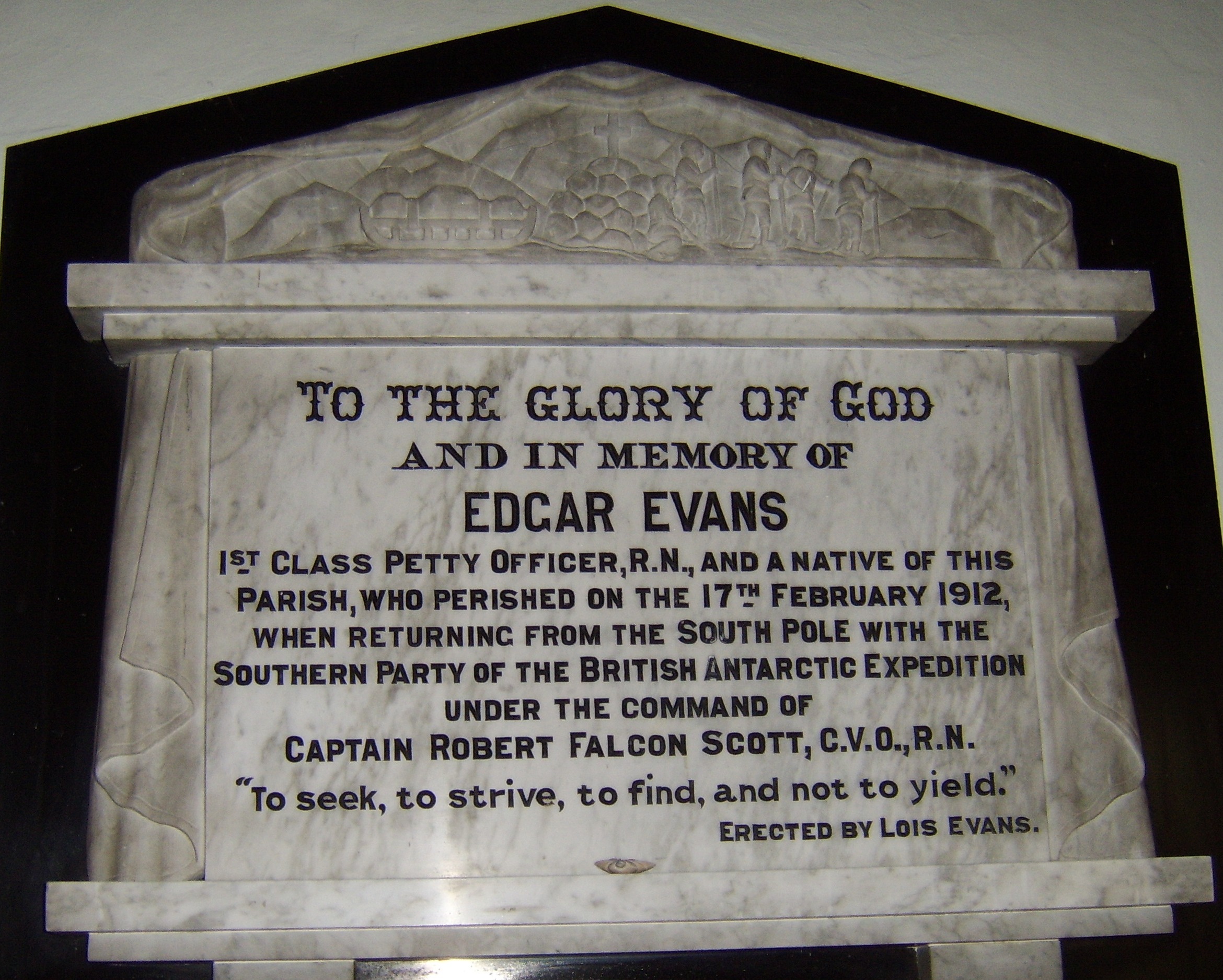
He is one of Wales’ greatest explorers – but few remember his name and there is no national monument in his honour.
There is a story behind why Wales may have tried to forget Edgar Evans – and it concerns a sense of misplaced shame.
Evans was with Captain Robert Scott when he stood at the South Pole more than 100 years ago. Upon arriving at the Pole they were already exhausted.
Their spirits sunk further when they realised Roald Amundsen had got there first.
Scott’s party was defeated first by the Norwegians and then by a terrible Antarctic winter which came in early and closed over them like a shroud.
Evans was the first of the five men to die. He was malnourished and a cut in his hand was festering.
On February 17, 1912, his exhausted body gave up.
The second to die, Captain Oates, had a leg wound which had turned gangrenous. His leg needed amputating. He crawled from the expedition tent in a blizzard around March 17th and was not seen again.
The remaining three – Scott, himself, Bowers and Wilson – died about 10 days later.
It took a year for the news of their deaths to reach Britain.
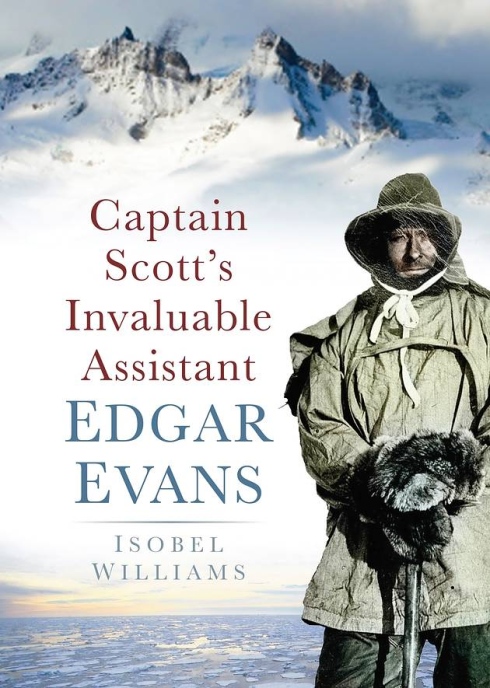
“People were initially very sad, then proud but then they had to try and find an explanation,” Dr Isobel Williams, author of a biography on Edgar, called ‘Captain Scott’s Invaluable Assistant’, says.
“In some newspapers they focused on Edgar as not only failing and slowing them down but by his failure and slowing the party he caused the death of all the expedition.”
The men had left Britain in 1910, sailing from Cardiff on board the Terra Nova with South Wales’ coal lighting its boiler.
Two nights before they left, the crew had celebrated at the Royal Hotel in St Mary Street. A century later the Captain Scott Society still meets there. Wales had contributed about half of the funds needed for Scott’s expedition.
But when news reached Britain of the men’s deaths, some began to feel a little ashamed of Evans.
Edgar’s grandson, John Evans, from Swansea, said on the 100th anniversary of the explorer’s death: “I think it was based on snobbery a bit because they made him the scapegoat in the beginning.”
Evans had been on not only the mission to the South Pole but Scott’s 1901-1904 Discovery expedition which had helped prove Antarctica was a continent and not a massive pack of ice.
In February 1941, Swansea became the first place outside London to suffer three consecutive nights of bombing.
During the dark nights of February 19, 20 and 21 the bombers came back almost constantly, killing 230 people and injuring more than 400 more.
Ports like Swansea had become priority targets for the Luftwaffe.
On duty in the city that February 1941 was Elaine Kidwell, a 17-year-old who had lied about her age to become one of the youngest air raid wardens in Britain.
During one of the raids she almost lost her life when a parachute mine exploded.
“Everybody was blown, and I was blown right across the road, crashed into a wall, and I didn’t have any breath in me,” she told me a few years ago. “Anyway I was coming around and I went into my pocket, and I wish I hadn’t it, because I’ve had my leg pulled about it ever since, I took my lipstick out and I put it on.
“I got my breath back, and he said to me – one of the wardens did – ‘That’s your armour, isn’t it?’. ‘Yes,’ I said, ‘As long as I’ve got my lipstick on I can face anything!’
Currently reading Sarah Helm’s book ‘A Life in Secrets: Vera Atkins and the Lost Agents of SOE’.
It’s a fascinating portrait of the SOE officer who looked after agents heading into the field.
The remarkable Noor Inayat Khan features prominently.
Noor (she later used the name Nora) was born in 1914 in Moscow to an Indian father and an American mother. The family moved to Paris, where she was educated. She later worked writing childrens’ stories.
Noor escaped to England after the fall of France and in November 1940 she joined the WAAF (Women’s Auxiliary Air Force). In late 1942, she was recruited to join SOE as a radio operator.
In June 1943 she was flown to France to become the radio operator for the ‘Prosper’ resistance network in Paris, with the codename ‘Madeleine’. Many members of the network were arrested shortly afterwards but she chose to remain in France and spent the summer moving from place to place, trying to send messages back to London while avoiding capture.
In October, Noor was betrayed by a Frenchwoman and arrested by the Gestapo.
In November 1943, she was sent to Pforzheim prison in Germany where she was kept in chains and in solitary confinement. Despite repeated torture, she refused to reveal any information. In September 1944, Noor and three other female SOE agents were transferred to Dachau concentration camp where on 13 September they were shot. Noor was 30.
For her courage, Noor Khan was posthumously awarded the George Cross in 1949.
One more for bridge lovers. Some photographs taken on a return from a research trip to the Normandy beaches a couple of years ago.
The sun was shining as we approached the Pont du Normandie, the 2,143-metre long cable-stayed road bridge which crosses the river Seine between Honfleur and Le Havre.
Pont du Normandie
Construction of the bridge, which was designed by Michel Virlogeux, began in 1988 and lasted 7 years. The bridge opened on January 20, 1995.
There is an 856-metre span between the two piers. At the time of the construction this was the longest span of its kind in the world.
Continuing east you then immediately cross another remarkable bridge.
It is a lovely stretch of the journey back from Normandy to the Pas-de-Calais area.
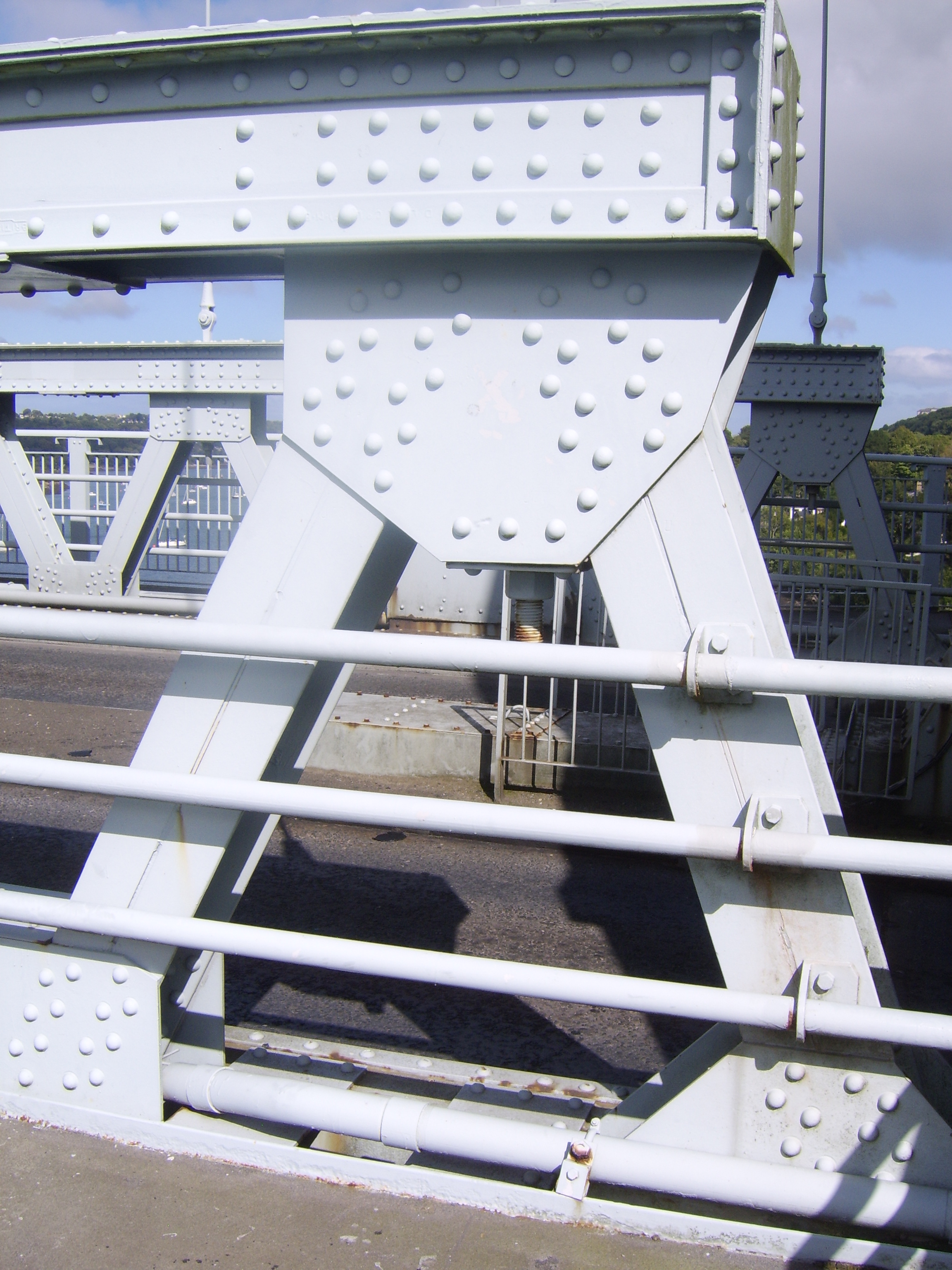
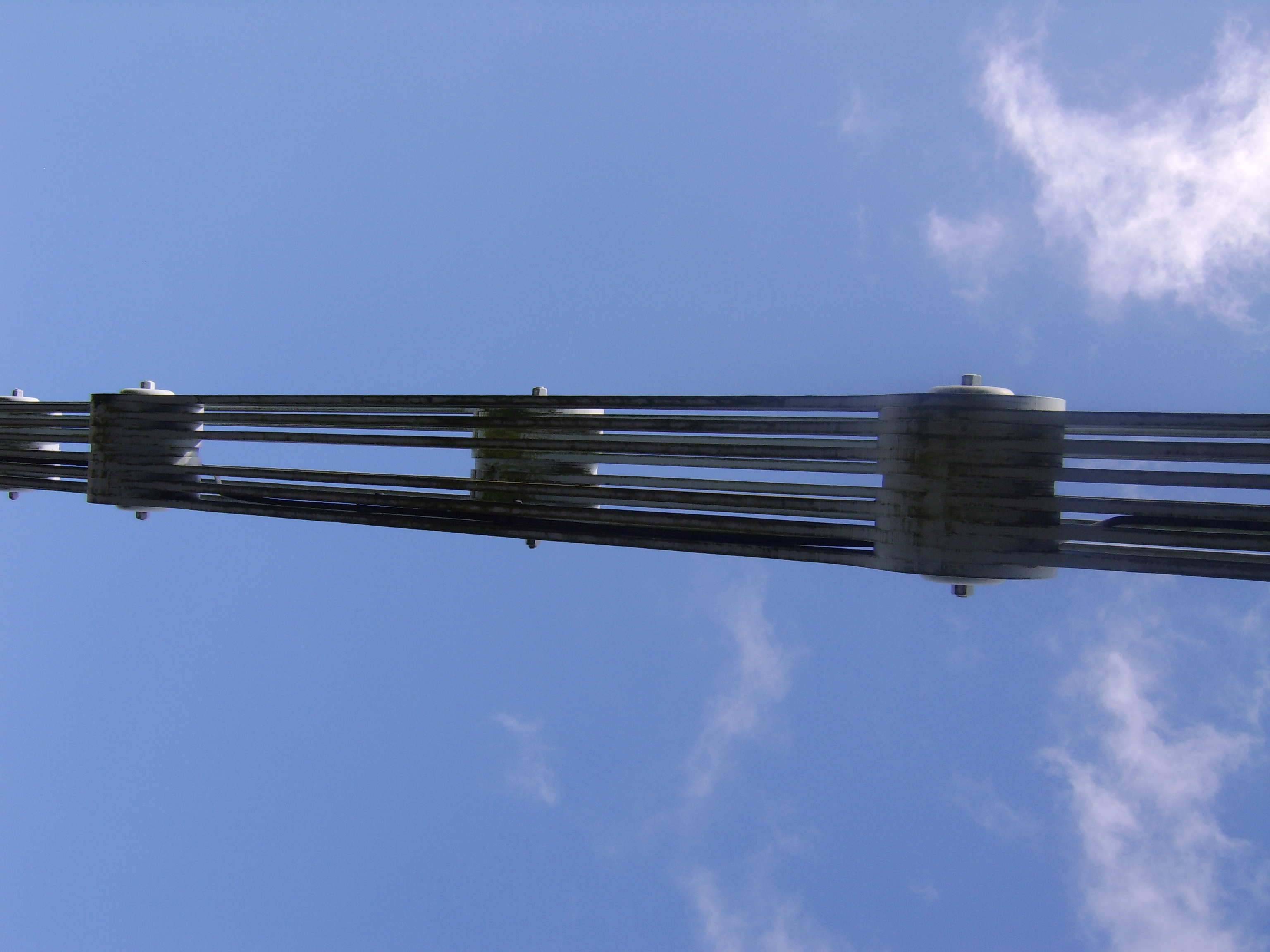
For those of you who enjoy a good bridge, here is one of the finest – the Menai Suspension Bridge, which links the island of Anglesey to the mainland of Wales.
It was designed by Thomas Telford and completed in 1826.
Before the bridge all movements from the island were by ferry. But links had to be improved from Dublin, via Holyhead, to London.
The design of the bridge had to allow for Royal Navy sailing ships 100 feet (30m) tall to pass under the deck at high tide.
Menai Bridge
I took these photos during a visit to Anglesey in September 2013.






 jon kilkade