
Just love this sketch from Burnistoun, a sketch show from BBC Scotland featuring comedians Iain Connell and Robert Florence.
Have a great weekend!

Just love this sketch from Burnistoun, a sketch show from BBC Scotland featuring comedians Iain Connell and Robert Florence.
Have a great weekend!
Fascinating.
“I was horrified at the destruction that had been wrought in a matter of seconds.”
 Captain Mitsuo Fuschida
Capt. Mitsuo Fuschida, Imperial Japanese Navy, pilot
Fuchida was the first pilot to fly over Pearl Harbor when the attack of 7 December occurred – here he describes his view of the Battle of Midway from the deck of the IJN Akagi;
“The first enemy [U.S.] carrier planes to attack were 15 torpedo bombers. When first spotted by our screening ships and combat air patrol, they were still not visible from the carriers, but they soon appeared as tiny dark specks in the blue sky, a little above the horizon, on Akagi’s starboard bow. The distant wings flashed in the sun. Occasionally one of the specks burst into a spark of flame and trailed black smoke as it fell into the water. Our fighters were on the job and the enemy again seemed to be without fighter protection.
 IJN Akagi
“Presently a report came in from a Zero…
View original post 795 more words
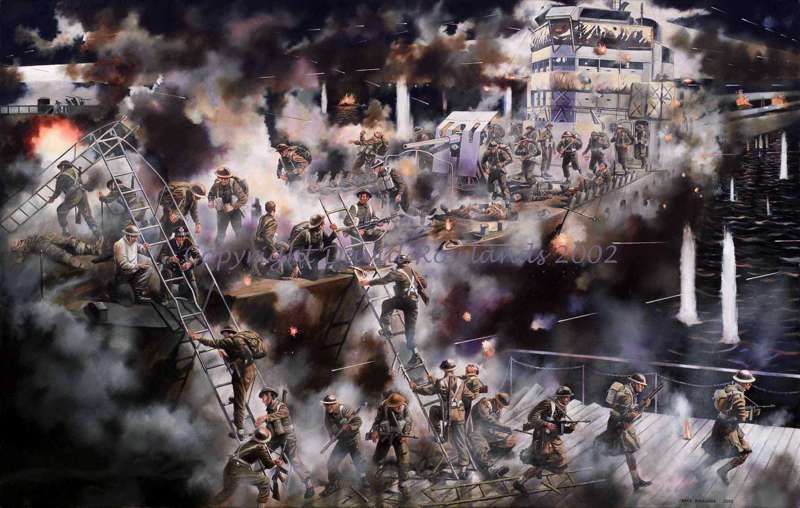
A ceremony has been held to remember the heroes of the raid on St Nazaire.
In March 1942, more than 600 men left Falmouth in Cornwall in a flotilla of three destroyers and 16 smaller boats.
The special fleet included HMS Campbeltown, which was packed with explosives and was used to to ram into the gates of the docks in the French port.
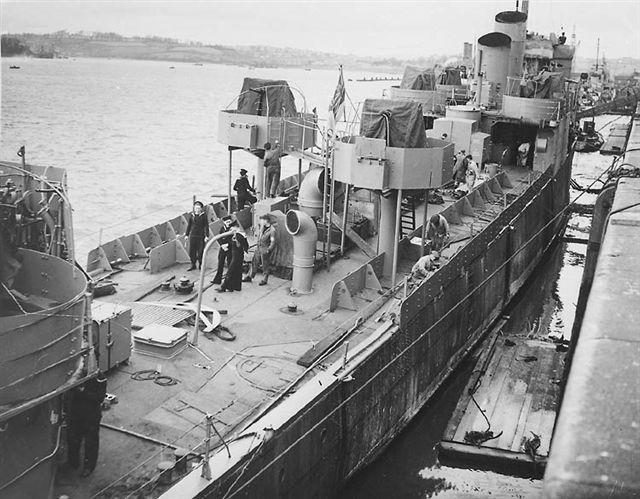
St Nazaire was targeted because the loss of its dry dock would force any large German warship in need of repairs, such as the Tirpitz, to return to home waters rather than having a safe haven available on the Atlantic coast.

The raid put the dry dock out of commission until the end of the war – but success came at a cost. Of the 622 men of the Royal Navy and Commandos who took part in the raid, only 228 men returned to England.

One hundred and sixty-nine men were killed and another 215 became prisoners of war. The fallen British raiders were buried at the Escoublac-la-Baule cemetery, near St Nazaire, with military honors.
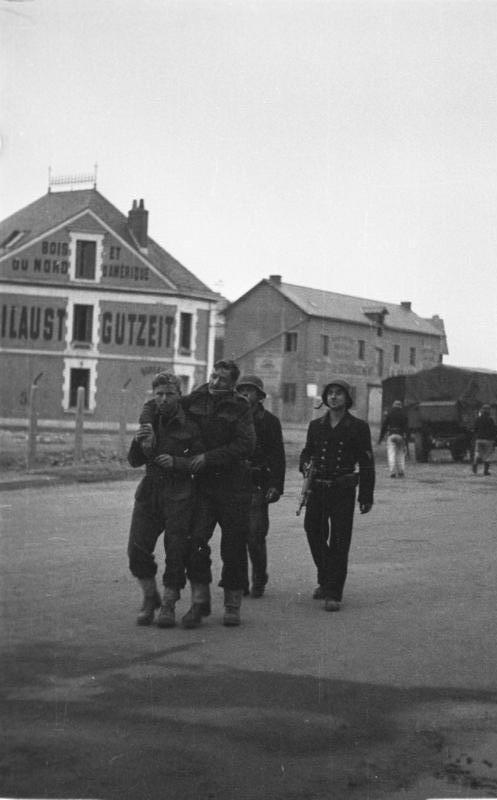
Five of the raiders escaped overland via Spain.
Eighty-nine awards and medals were bestowed for the raid, including five Victoria Crosses.
The organiser of this weekend’s event in Falmouth, Eric Dawkins, stated: “The destruction of the dock meant those facilities were no longer able to be used. Falmouth played a major part.
“I’ve known these veterans [who took part], including those few who are still remaining, for 30-odd years and know their tales.”
Fascinating actress, with a sad, compelling life story.

The sun shines on the Welsh National War Memorial in Cardiff.
It commemorates the servicemen who died during the First World War. A plaque to those who died during the Second World War was added in 1949.
The memorial takes the form of a circular colonnade surrounding a sunken court and was unveiled in June 1928 by the then Prince of Wales.
It features inscriptions in Welsh and in English, and was designed by Sir Ninian Comper, the Scottish architect who mostly worked on designs for churches.
At the centre of the court is a group of bronze sculptures by Alfred Bertram Pegram, arranged around a stone pylon.
Around the base stand three figures, a soldier, sailor and airman, holding wreaths aloft.

It is situated in Alexandra Gardens, Cathays Park, and is made from the same stone as the civic buildings which surround the gardens.

 jon kilkade